Machine Olfaction
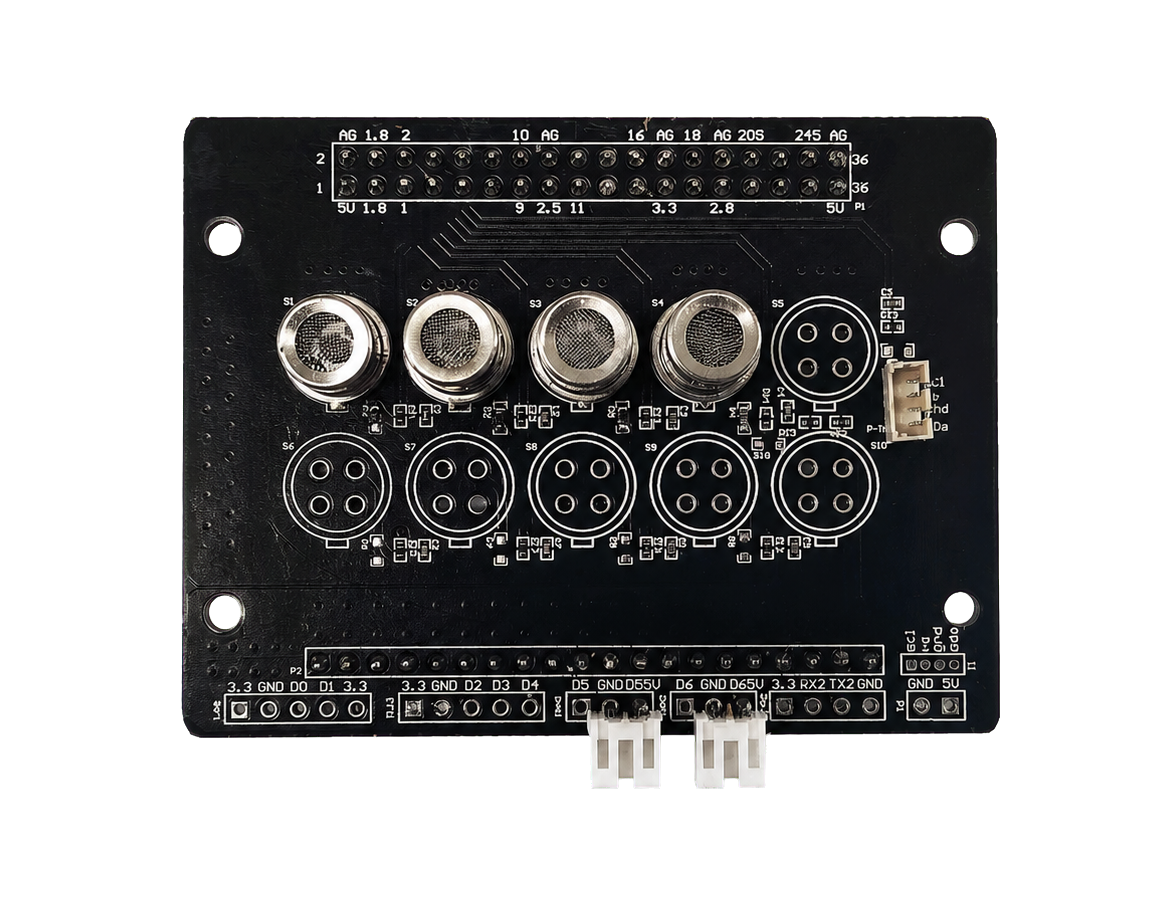
He develops electronic-nose systems that capture, process, and interpret chemical signals from the physical world.
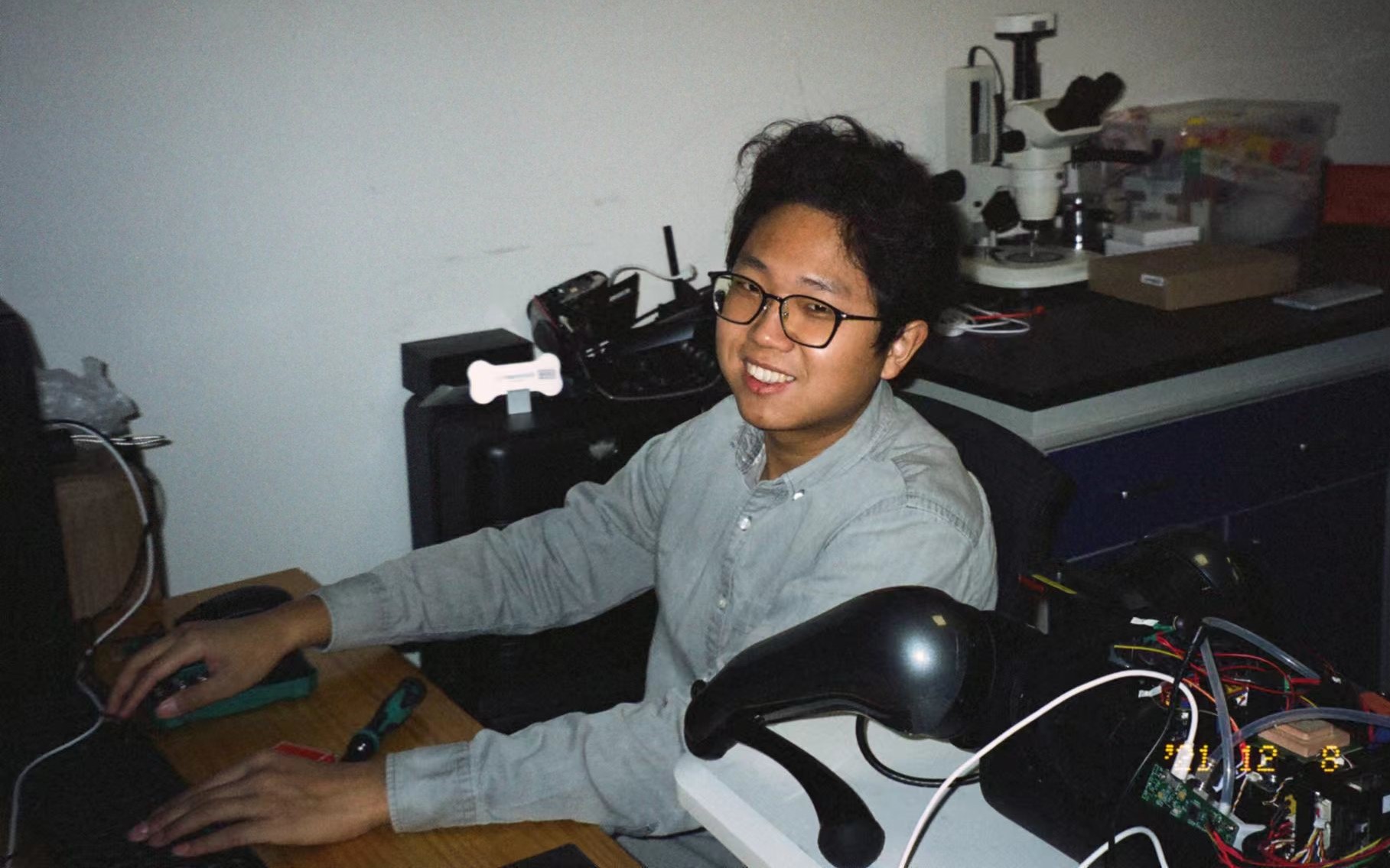
Gang Yu is currently a PhD candidate at The Future Laboratory / Academy of Arts & Design, Tsinghua University, co-advised by Prof. Keyang Tang and Prof. Yingqing Xu. He is the core member of COS Lab - Coding Olfactory Space. He has earned his master's degree in Design (Tsinghua University) and bachelor's degree in Creative Design and Intelligent Engineering (Xinya College, Tsinghua University).
He works across machine olfaction, AI smell, and human-computer interaction. Compared with traditional modalities such as vision and hearing, olfaction enables robots to capture chemical signals from the environment, thereby allowing them to detect abnormal odors, assess environmental changes, and even anticipate potential risks. Through olfactory sensing, intelligent systems can identify concealed hazards that are smokeless, colorless, and silent, such as burning odors, food spoilage, and hazardous gases.
His research aims to address existing theoretical limitations and overcome technological and design challenges in areas including electronic noses, machine olfaction, AI for odor encoding, and olfactory human-computer interaction.
He develops electronic-nose systems that capture, process, and interpret chemical signals from the physical world.
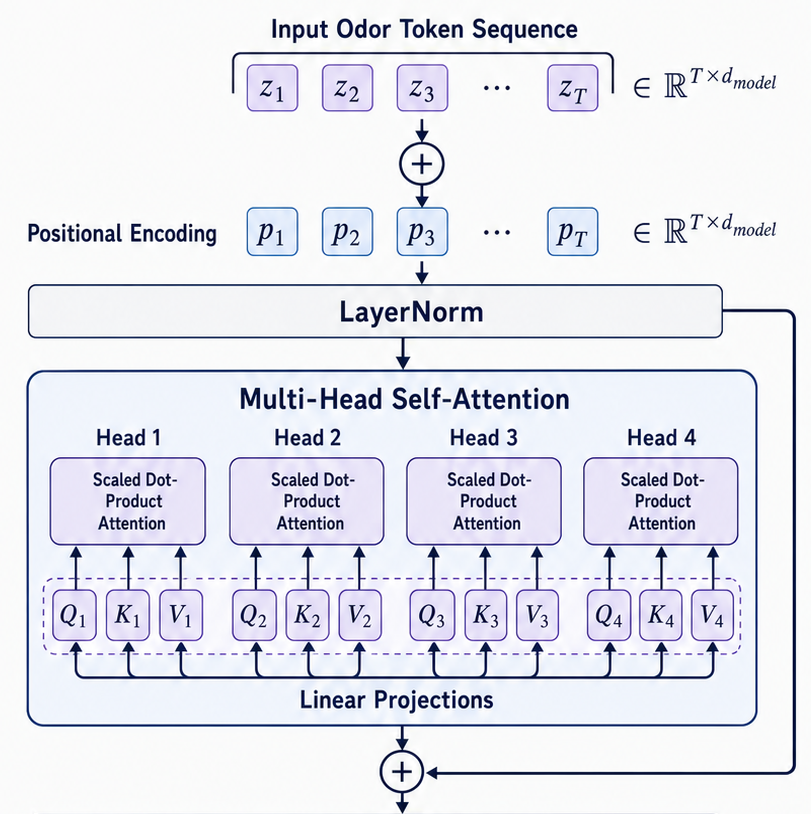
He explores how artificial intelligence can structure odor information, understand olfactory context, and reason about smell.
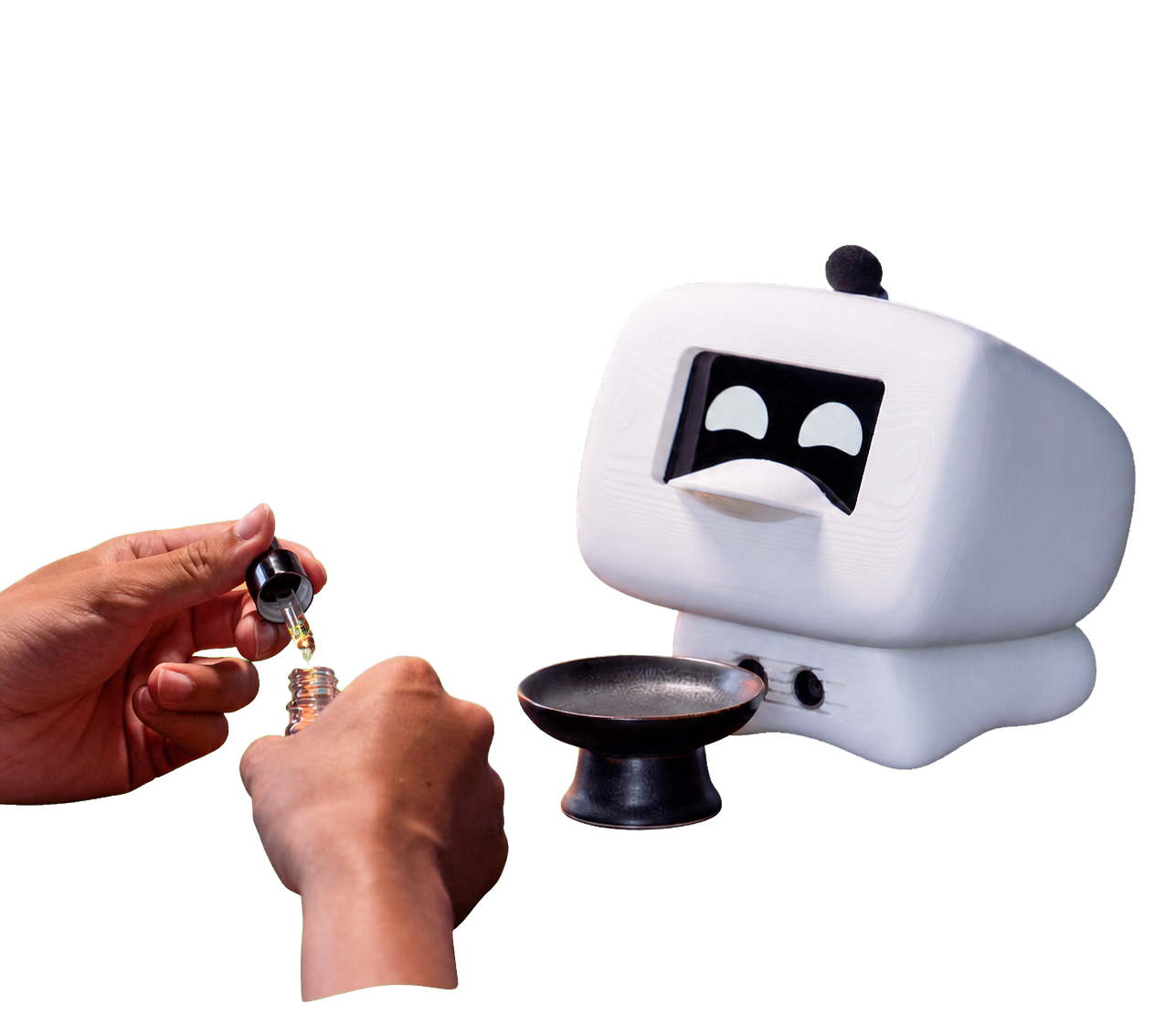
He designs interactive systems that make smell a meaningful channel between people, intelligent devices, and environments.
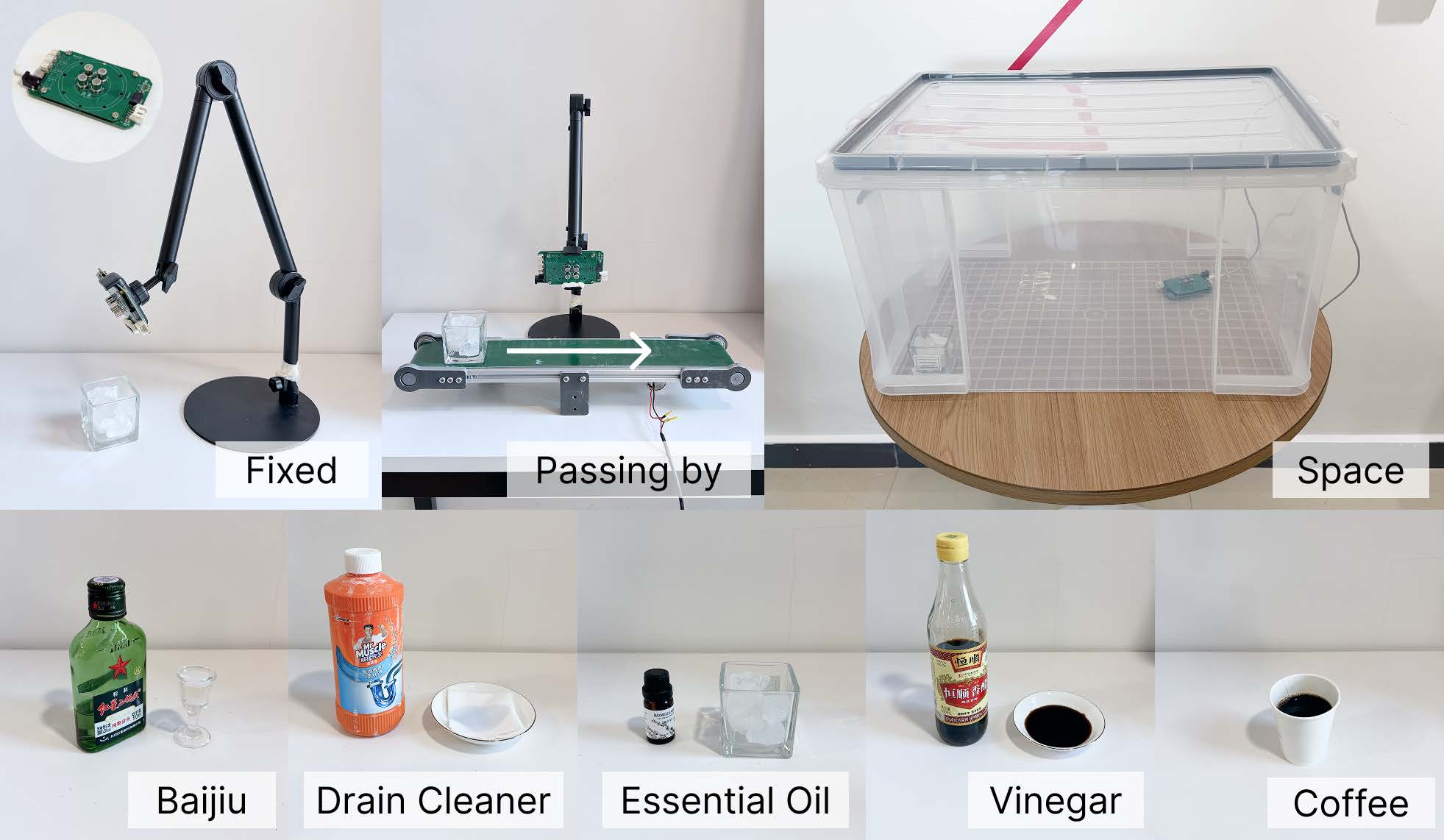
IEEE ISOEN 2026 · In press
Using five substances across static open-space, passing open-space, and enclosed environments, we show that E-noses can jointly decode chemical identity and source-environment context, achieving 95.5% dispersion-state and 81.7% substance classification accuracy.
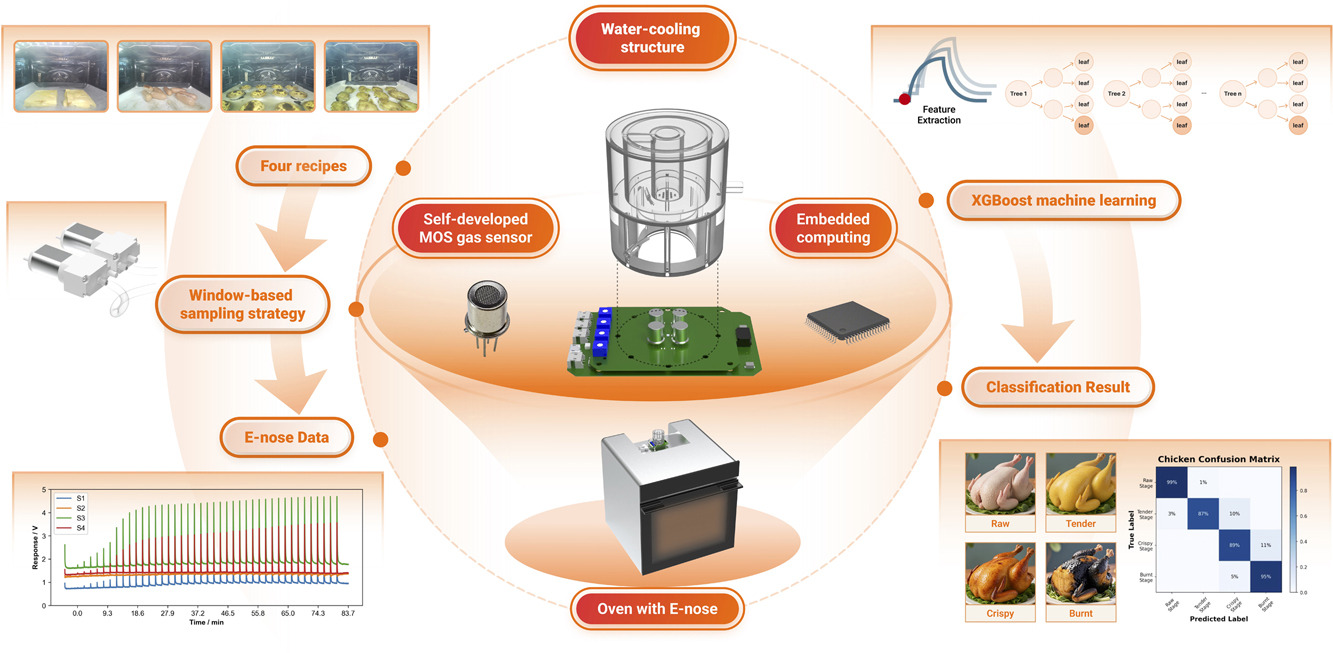
Sensors and Actuators B: Chemical · 2026
Burnt odors provide early indicators of kitchen fire hazards. We integrate a four-sensor E-nose with a household oven to recognize raw, tender, crispy, and burnt stages, achieving 91.3% average accuracy across 20 real-time cooking trials.
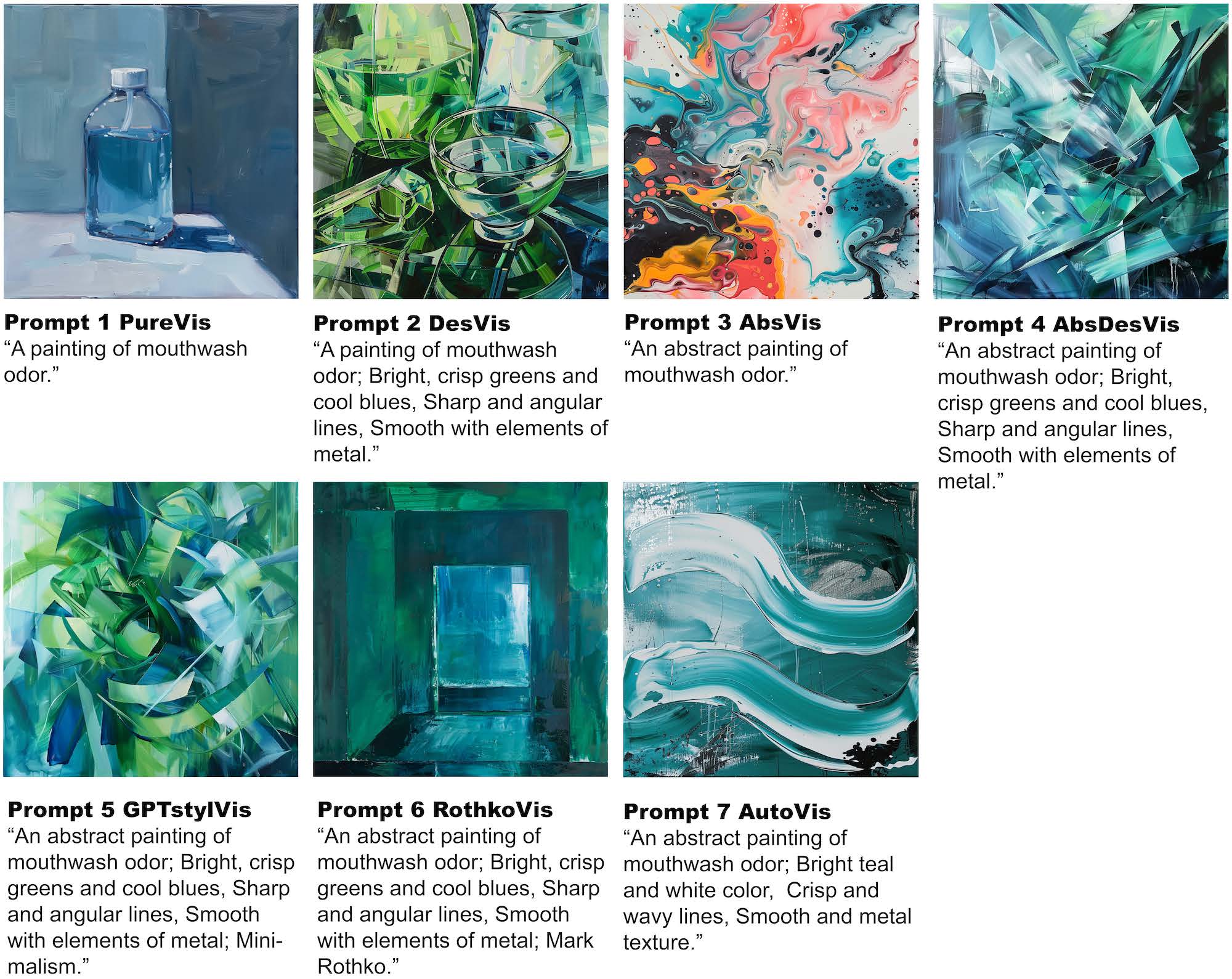
arXiv · 2026
Paint by Odor uses generative AI and large language models to translate olfactory perceptions into rich visual representations. Studies with 30 odor-description participants and 28 image-evaluation participants reveal how language descriptions and abstraction styles shape odor visualization.
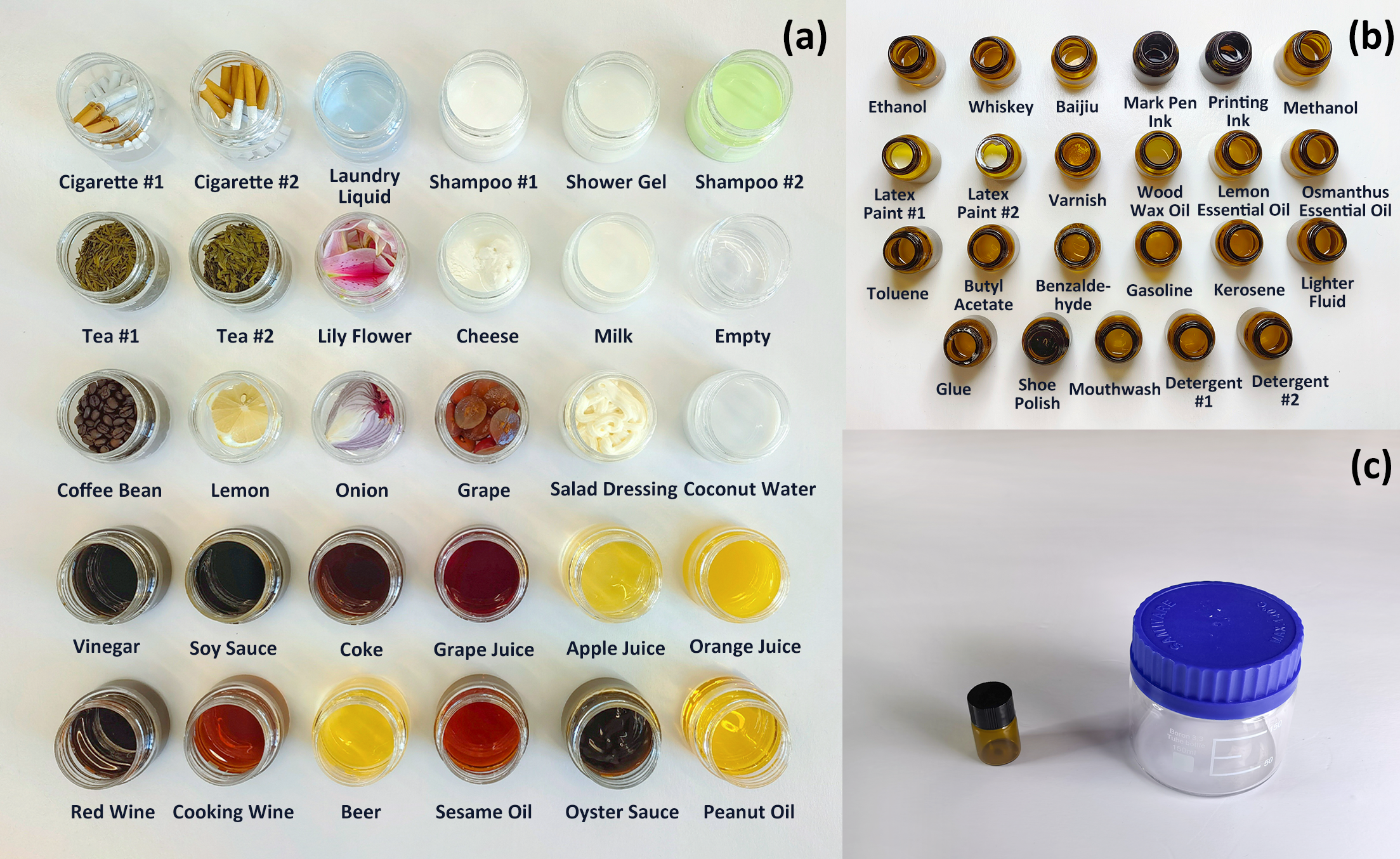
Sensors and Actuators B: Chemical · 2025
Electronic noses are commonly designed for specific substances or single-purpose tasks. We present a miniaturized broad-spectrum E-nose that detects 53 common substances in their original states, achieves 95.0% offline accuracy, and performs real-time on-board detection in only seven seconds.
CCF Transactions on Pervasive Computing and Interaction · 2025
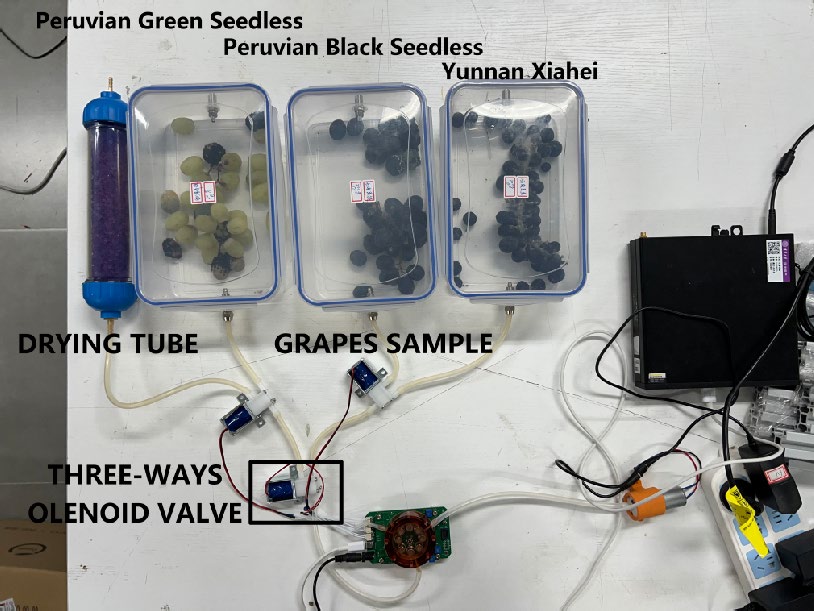
This study develops a non-invasive, automated odor-collection system for grape freshness assessment during storage and transportation. Continuous monitoring, inflection-point detection, and machine-learning analysis show the potential of E-nose technology for identifying freshness, spoilage stages, and grape varieties.
Chinese CHI · 2021
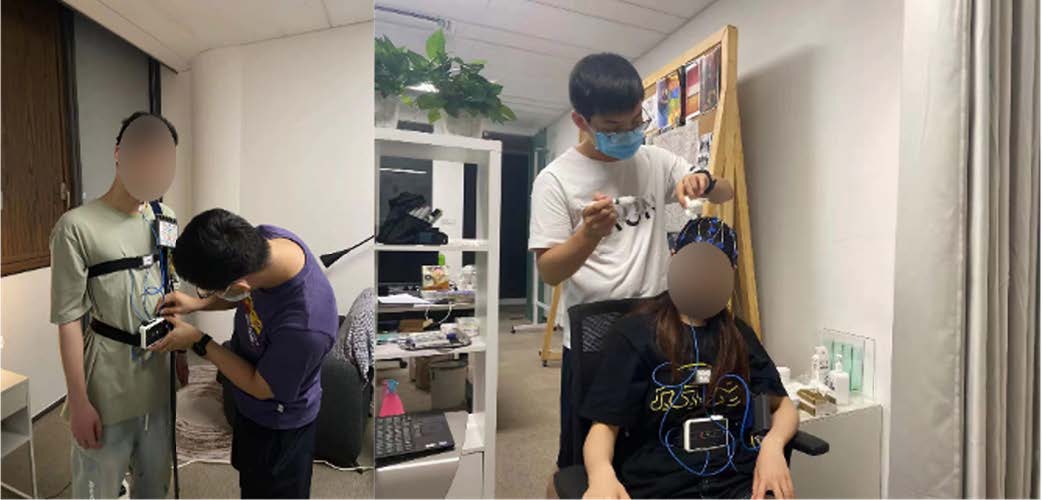
This research explores artistic dream visualization using EEG data recorded during REM sleep. Objective brain signals from 11 participants are combined with subjective emotion evaluation to generate abstract visual expressions of dreams.
ACM UIST · 2025
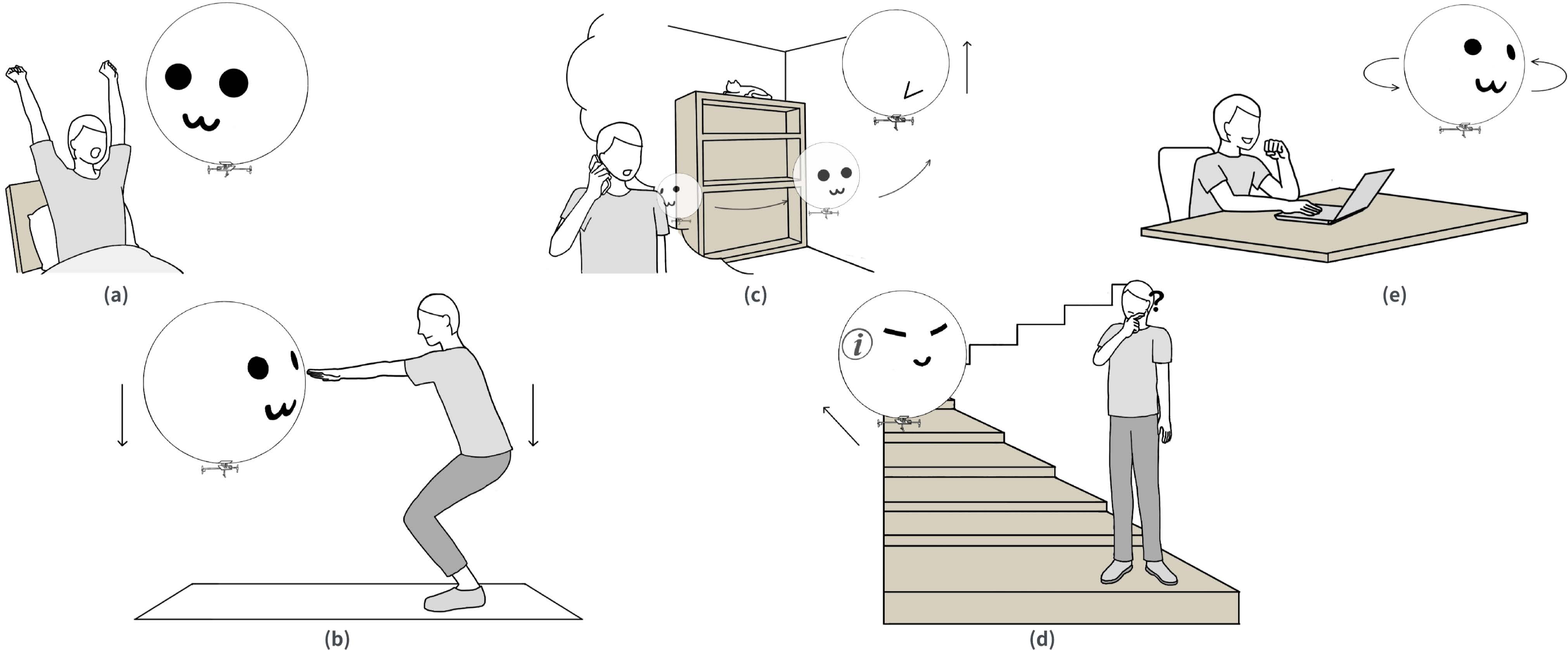
This work explores a social balloon robot as an embodied agent combining spatial mobility with safe, approachable interaction. Through a BalloonBot prototype and an exploratory user study, we examine perceptions of its social functions and considerations for future applications.

Design Project
A safer and quieter alternative to indoor quadrotors. The aerostat uses a helium-filled main airbag for buoyancy and an auxiliary airbag to change its mass, combining mechanical design, electronic hardware, control algorithms, and industrial design.
Email:
yug24@mails.tsinghua.edu.cn
WeChat: yugang16
Location: Building A, Shuangqing Zonghe Building, Haidian District, Beijing, China